Novel proximity enzymes
Engineering enzymes that capture dynamic post-translational modifications in complex biological matrices.
Standard proximity-labeling enzymes record that two proteins were near one another, but they discard the chemical state of those proteins. Much of the regulatory information in a cell is written in post-translational modifications such as phosphorylation, and that information is lost when a method reports only physical proximity. We have engineered a next-generation of proximity-labeling enzymes and labeling chemistries designed to capture modifications in complex matrices so that dynamic PTMs can be followed spatially and temporally across cellular compartments.
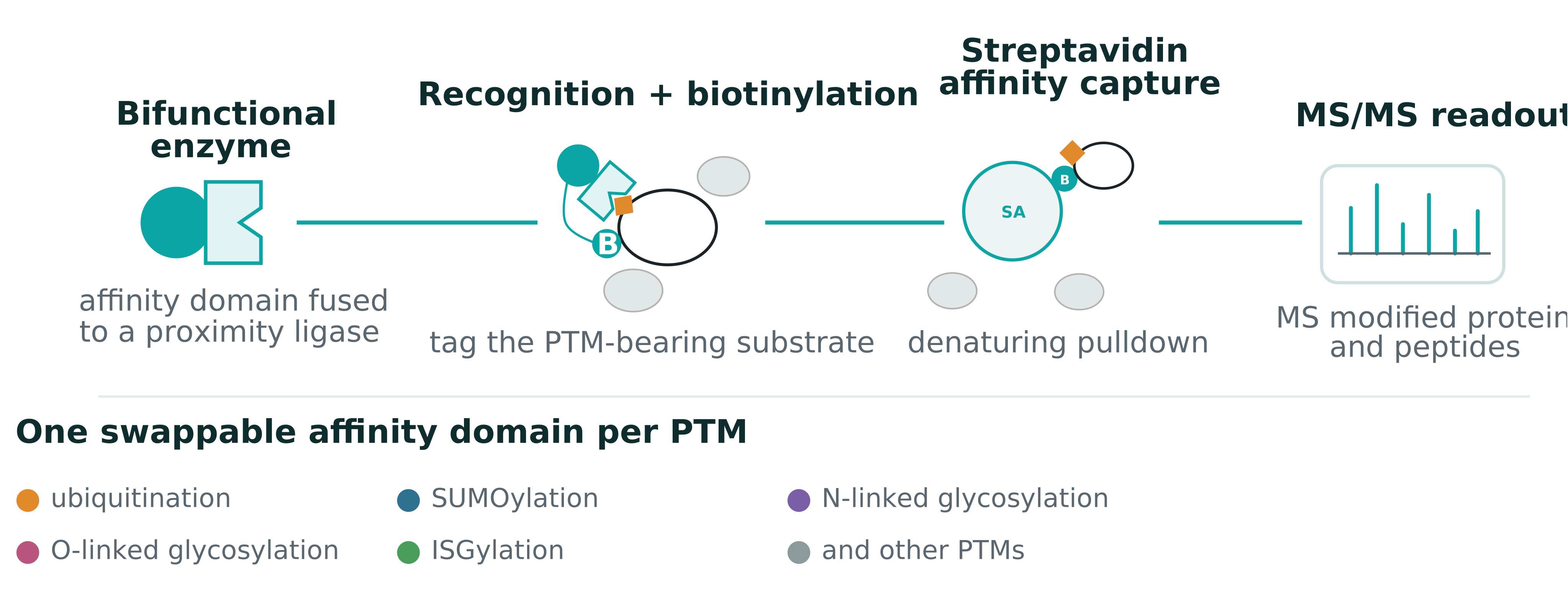
In practice, this means fusing a biotin ligase of choice to an affinity domain that recognizes a specific post-translational modification, leading to the construction of a bifunctional biotin ligase enzyme. Once the affinity domain engages its target modification in a complex mixture, the ligase biotinylates the modified protein. Under denaturing streptavidin capture, the biotin-labeled PTM-modified protein is recovered and processed for tandem mass spectrometry analysis. Bifunctional biotin ligases targeting the PTMs of ubiquitination, SUMOylation, N-linked and O-linked glycosylation, ISGylation, and other modifications become a feasible experimental approach to study signal-mediated PTMs on a global scale.
We aim to interrogate complex biological strata such as primary cells, preclinical cell lines, or tissues, where conventional PTM enrichment methods are exceedingly difficult to scale due to limited reagent availability and/or high costs. By extending proximity proteomics from "who is near my target receptor," there is added biological value in understanding how PTM-modified states correlate with receptor-proximal neighborhoods. We predict these reagents will have the power to read signaling events spatially and temporally, rather than inferring PTMs based solely on previously annotated physical interactions.