Proximity interaction networks
Mapping the protein communities that assemble around disease regulators inside living cells.
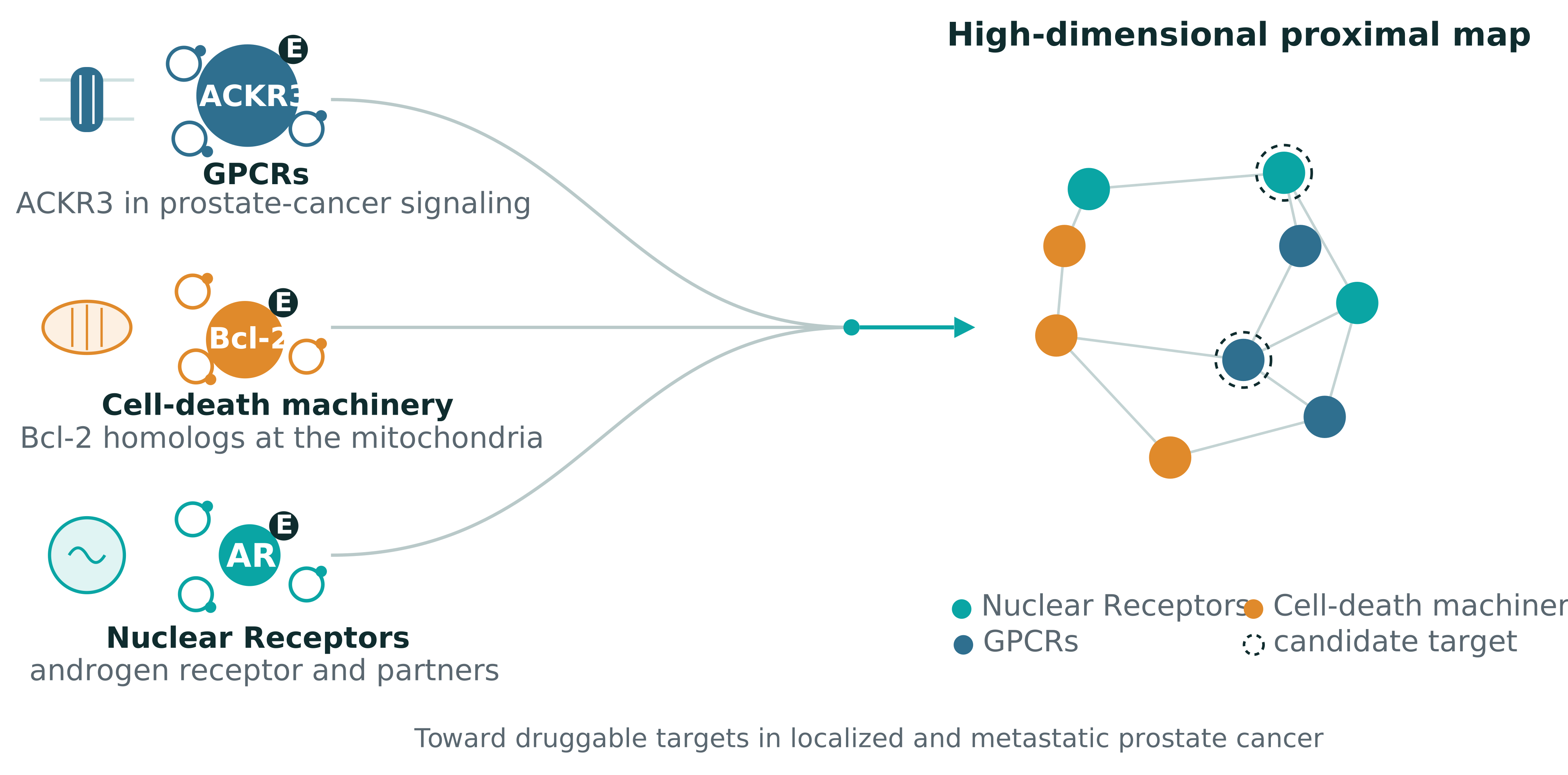
Proteins rarely act alone. Instead, they work in transient, tightly organized communities that assemble at the right place and moment to drive a cellular decision. The lab maps these communities directly inside living cells using proximity-labeling proteomics, an approach where an engineered proximity-labeling enzyme is fused to a regulator of interest and tags and maps proximal neighboring proteins that come within a few 100 nanometers. Combining proximity ligase (PL) approaches with quantitative mass spectrometry (qMS) facilitates the identification and quantification of proteins. In effect, it allows cataloging of tagged neighbors to produce a census of the regulator's molecular neighborhood as it exists in the cell.
We use PL-qMS to build topological maps and neighborhoods of proximal networks for master regulators of cellular proliferation, cell death, and differentiation in clinical models of human prostate cancer. By resolving the neighborhoods separately in different subcellular compartments and across a signaling time course, we will capture how a receptor's protein community reorganizes as the cell commits to one fate over another. The result is a compartment-resolved, time-resolved interaction map that nominates the specific partners through which a signal is transmitted, and that points to the nodes most worth targeting therapeutically in our effort to disrupt cellular signaling underlying different pathological states in human prostate cancers.