Reagents & methods for cell biology
Optimizing the reagents and assays that screen and functionally validate proximal interactions.
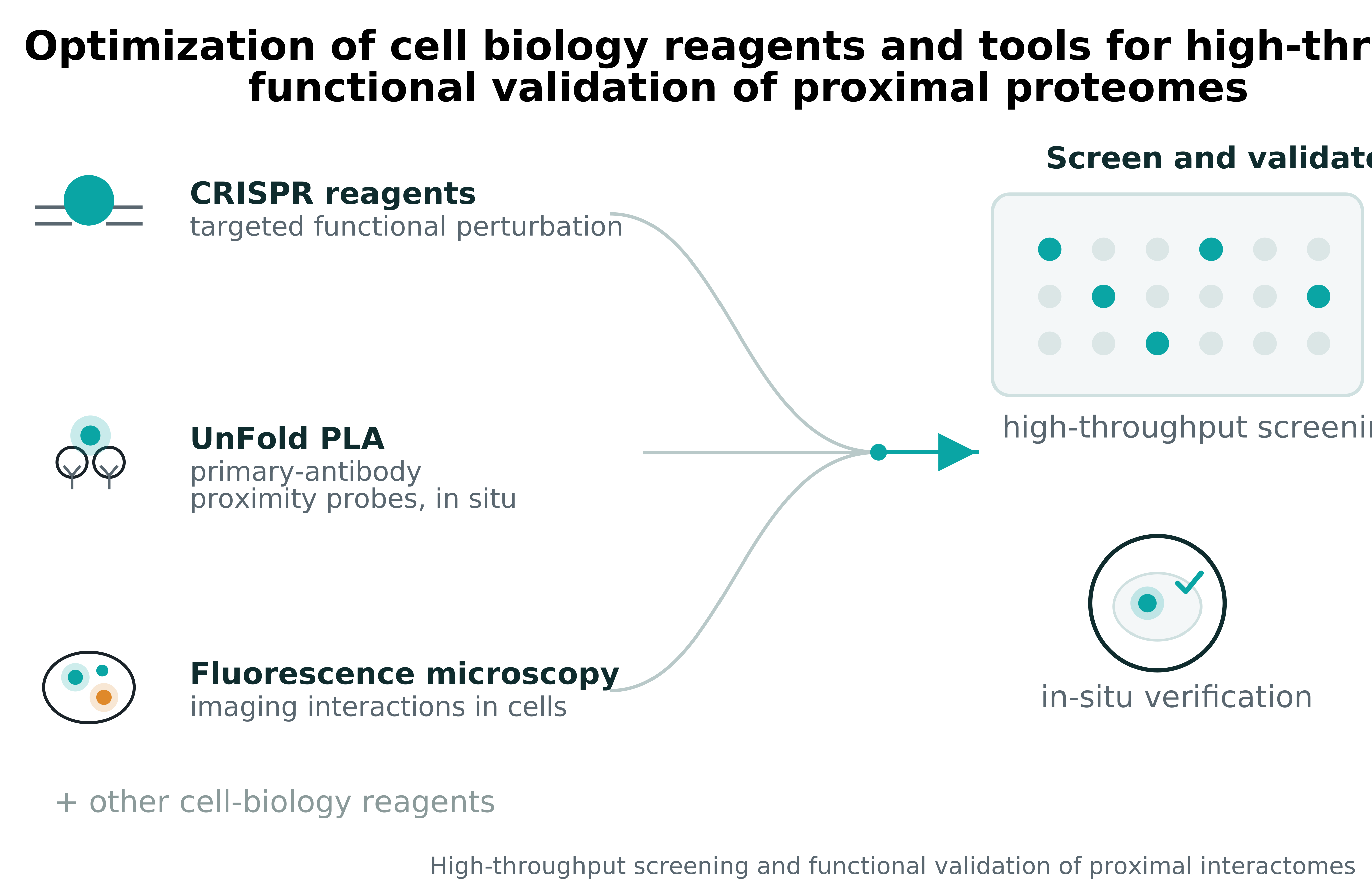
Discovering a proximal interaction is only the beginning because signaling hubs tend to be sticky receptors and thus contain many proximal neighbors. To get a handle on whether a proximal partner impacts a receptor's function, one must optimize and scale cell-biology reagents and assays that can interrogate proximity neighborhoods quickly and robustly, as testable functional hypotheses. We leverage CRISPR screening to ablate proximal partner expression, followed by ascertainment of receptor function. We have also invested in low-cost secondary UnFold probes to facilitate the high-throughput implementation of proximity ligation assays to confirm proximal interactions in situ. Lastly, we are implementing gene-editing and fluorescence microscopy tools to validate proximal interactions in live cells.
The goal of this workflow is to ascertain the function of proximal neighbors through gene perturbations and proximal verification of native cellular context, so that proximal interactions discovered by PL-qMS are prioritized based on experimental evidence rather than proximity alone. Overall, our approaches and reagents will facilitate the high-throughput screening and functional validation of the proximal interaction networks (PINs) in the lab. Construction of PINs will drive the generation and testing of new hypotheses regarding the function of proximal proteomes underlying signal-mediated transduction pathways.